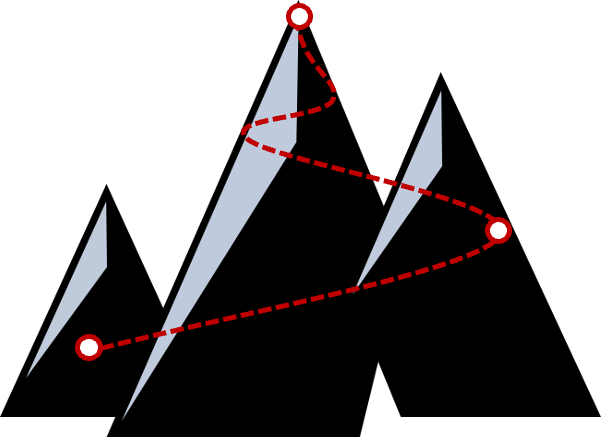
Strategy must become operational
Strategy used to be a document. It is now a system of decisions made in real time, under capital, under scrutiny, under speed. For decades, strategy was often treated as a periodic exercise — a management offsite, a board presentation, a five-year plan, a set of slides designed to describe where the company wanted to go.
That world is disappearing. Markets move too quickly. Capital is more selective. Technology cycles are shorter. Customers change behaviour faster. Competitors emerge from unexpected places. In this environment, strategy cannot remain static — it must become operational.
Indicative trend across mid- and large-cap operating models. Decisions are increasingly made between planning cycles rather than within them.
The end of static strategy
A static strategy assumes the world waits. It does not. By the time many strategic plans are approved, the assumptions behind them have already begun to change — market conditions shift, financing conditions change, customer priorities evolve, technology creates new alternatives. The challenge is not creating a strategy. The challenge is creating a strategy that can adapt without losing direction.
Strategy as a decision system
The strongest organisations do not treat strategy as a document. They treat it as a decision system: a way to allocate capital, prioritise resources, decide what not to do, and align leadership under uncertainty. Strategy should create clarity when information is incomplete. It should help management make better decisions faster. If strategy does not improve decision quality, it has limited value.
Capital allocation reveals strategy
Every company has a stated strategy. The real strategy is revealed through capital allocation — where money is deployed, where management attention goes, which projects continue, which projects stop, which markets receive investment, which risks are accepted. Capital allocation exposes whether a strategy is real or merely narrative. Boards and investors understand this. Eventually, markets do too.
Speed without discipline is dangerous
Modern companies are under pressure to move faster — faster product development, faster transformation, faster expansion, faster adoption of AI and technology. Speed matters. But speed without discipline creates fragility.
The objective is not simply to move quickly. The objective is to make better decisions at higher velocity. This requires structure, governance, clear priorities, reliable information and accountability. Without these, speed becomes noise.
The role of management
Management teams increasingly operate in environments where strategy and execution cannot be separated. Strategic choices must be tested operationally; operational feedback must shape strategy. The separation between planning and doing is narrowing, and this places greater demands on leadership. Executives must think strategically and execute commercially, understanding markets, capital, technology and people simultaneously. Strategy has become a management capability, not a planning function.
The Applique perspective
At Applique, we believe strategy is no longer a presentation. It is a system for making better decisions under uncertainty. The companies that outperform will not be those with the most polished plans — they will be those that connect strategy, capital allocation, execution and learning into one operating rhythm.
Strategy should not sit above the business. It should run through it. That is where strategic clarity becomes enterprise value.
The content reflects Applique's perspectives on strategy, capital, entrepreneurship, leadership, AI, transformation and value creation and is intended for informational purposes only. Figures shown in charts are illustrative, drawn from Applique's pattern observations across mandates, and not historical performance data.