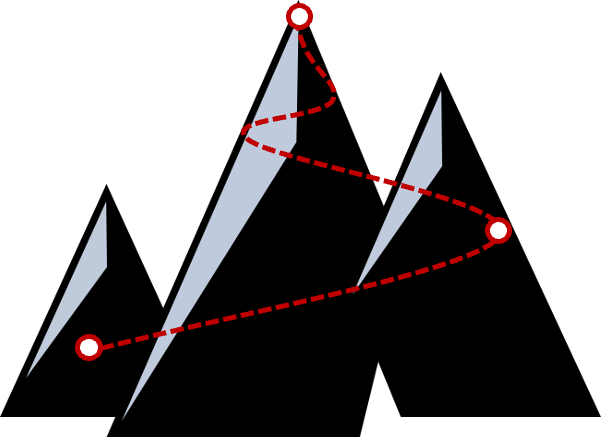
When instinct becomes insufficient
Every successful company eventually reaches a point where instinct becomes insufficient. In the early stages, founders make decisions quickly: information is imperfect, processes are informal and execution is driven by proximity to customers, employees and markets. Speed, adaptability, conviction and resourcefulness are usually where a company's greatest strengths emerge.
Yet the qualities that create early success rarely sustain long-term growth on their own. As organisations grow, complexity compounds — customers become more demanding, operations more sophisticated, capital requirements increase and governance expectations evolve. The entrepreneur's dilemma begins.
Growth changes everything
Growth is often celebrated as an objective. Less attention is paid to what growth actually requires. Growth creates pressure, and pressure exposes weaknesses. The systems that supported a company at €2m in revenue may fail entirely at €20m. The leadership structure that worked with ten employees may become a bottleneck at fifty. What once felt entrepreneurial may begin to feel chaotic.
The challenge is not simply growing. The challenge is growing without breaking the organisation.
As revenue scales, organisational complexity rises geometrically while a founder's personal decision bandwidth is broadly fixed. The crossover marks where institutional capability must take over.
When capital becomes available
Many founders assume access to capital will solve their biggest challenges. In reality, capital often introduces new ones. External investors bring expectations: growth targets increase, reporting requirements become more demanding, decision-making becomes more scrutinised, and the organisation is expected to professionalise.
None of these developments are negative — but they require preparation. Capital should support a strategy. It should not replace one.
The danger of scaling assumptions
Many businesses scale based on assumptions that have never been properly tested. A successful product becomes a product portfolio. A successful market becomes international expansion. A successful sales process becomes a larger sales organisation. Yet what worked previously may not work at scale: customer acquisition costs may increase, margins may decline, competition may intensify, execution becomes more difficult.
The entrepreneur's role is not simply to pursue growth. It is to determine whether growth remains economically attractive as complexity increases.
Structure is not bureaucracy
Many founders fear structure because they associate it with bureaucracy. Poorly implemented governance can slow decision-making and reduce agility — but effective structure achieves the opposite. It creates clarity, improves accountability and allows organisations to scale without relying on a small number of individuals. The objective is not to eliminate entrepreneurial behaviour. It is to make it sustainable.
Building a company worth owning
Investors often ask whether a company is investable. A more important question may be whether the company is durable. Can it survive leadership transitions? Can it withstand economic cycles? Can it attract talent? Can it operate independently of any single individual? Companies that answer these questions successfully create something more valuable than growth. They create resilience.
The Applique perspective
The entrepreneur's dilemma is not a capital problem. It is a transition problem — from founder-led execution to institutional-quality growth, from opportunity to structure, from ambition to repeatability. At Applique, we help founders navigate that transition: not by replacing entrepreneurial energy, but by creating the governance, strategic clarity, commercial discipline and execution capability required for long-term success.
Growth creates opportunity. Preparation determines whether that opportunity becomes value.
The content reflects Applique's perspectives on strategy, capital, entrepreneurship, leadership, AI, transformation and value creation and is intended for informational purposes only. Figures shown in charts are illustrative, drawn from Applique's pattern observations across mandates, and not historical performance data.